
What are dental cleanings?
A dental cleaning removes plaque, tartar, and staining from the teeth and gumline that cannot be removed by brushing alone.
Professional cleanings are essential for preventing decay and gum disease. For patients with dental anxiety, special needs, or complex medical conditions, completing a cleaning can be impossible without sedation. We provide IV sedation and General Anesthesia to ensure every patient can access the routine care they need.

Treatment time:
1 visit under sedation. No downtime required.

Best for:
Patients with dental anxiety, special needs, or those unable to tolerate cleaning while awake.

May include:
Plaque and tartar removal, polishing, fluoride treatment, IV sedation or General Anesthesia.
Why choose sedation for cleanings
Sedation makes cleanings accessible for patients who cannot tolerate the procedure while awake. It also allows a more thorough cleaning without interruption.



The Dream Visit ™ experience.
Dream Visit™ is our proprietary sedation protocol that allows patients to complete complex dental treatment comfortably under IV sedation or General Anesthesia.
You sleep comfortably while our specialists complete your dental care. Wake up with your treatment finished.

Book a Free Consultation
Personalized Sedation Plan
Sleep Comfortably
Wake Up Smiling
All you need to know about dental cleanings
Why can't I just have a regular cleaning without sedation?
For most patients you can. But for patients with severe dental anxiety, a strong gag reflex, special needs, dementia, or those who have been unable to complete a cleaning in the past, sedation is the only way to access routine care safely.
+Building trust through every visit
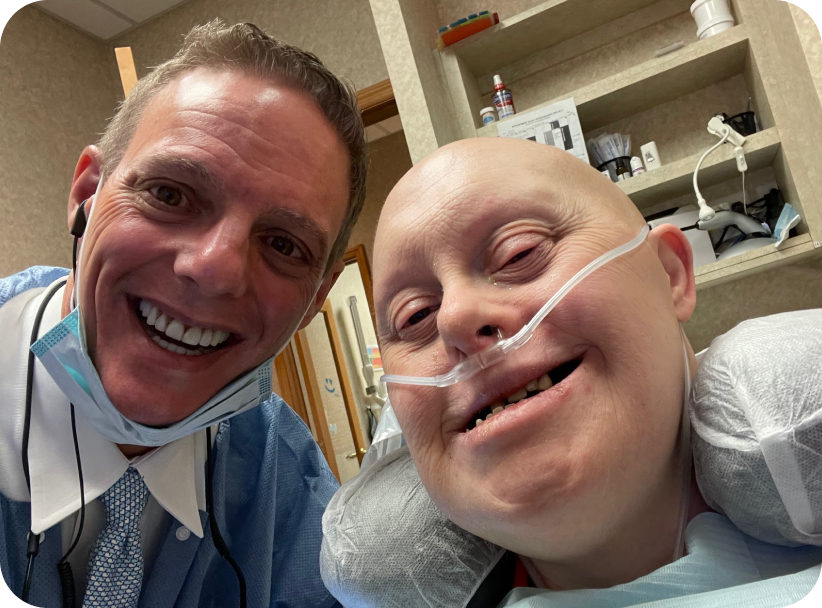
Although some dental cases can be complex, our patients become part of our extended care family. As they return for treatment, they begin to recognize familiar faces and feel more at ease. Our team builds trust over time — creating a safe and positive experience. For many families, what once felt impossible becomes manageable.
Over 30 years experience in sedation dentistry.
Smiles restored with dental sedation.
5 star reviews
Frequently asked questions.
Can I get a dental cleaning under sedation?
Yes. We provide professional cleanings under IV sedation and General Anesthesia for patients who cannot tolerate the procedure while awake.
How often should I get a cleaning under sedation?
Every 6 months for most patients. Those with active gum disease may need cleanings every 3-4 months. We tailor the schedule to your oral health needs.
Can other treatment be combined with my cleaning?
Yes. We can combine a cleaning with fillings, X-rays, extractions, or other treatment in a single sedation visit – reducing the number of appointments needed.
Is sedation safe for a routine cleaning?
Yes. We use hospital-grade monitoring throughout including ECG, oxygen saturation, and blood pressure. Our Dental Anesthesiologist is present for every procedure.
Does insurance cover cleanings under sedation?
We work with most insurance companies. Sedation coverage varies.
Do I need a driver?
Yes. A responsible adult must drive you home and stay with you for several hours after sedation. You cannot drive on the day of your procedure.
What Patients & Families Say





We’re here to help
How did you find us?
Two quick taps. It helps us reach more patients who need care.