
What are periodontal procedures?
Periodontal procedures treat gum disease, ranging from deep cleaning to surgical correction of advanced gum and bone damage.
Periodontal disease affects the gums and bone supporting your teeth. Treatments range from scaling and root planing for early disease to surgical procedures for advanced cases. Under sedation the entire course of treatment can be completed comfortably in fewer visits.

Treatment time:
1-2 visits under sedation. Mild soreness 2-4 days after.

Best for:
Patients with gum disease, deep pockets, bone loss, or dental anxiety requiring deep cleaning or surgical treatment.

May include:
Scaling, root planing, gum surgery, bone grafting, pocket reduction, IV sedation or General Anesthesia.
Why choose sedation for periodontal procedures
Periodontal treatment often involves multiple quadrants and extensive work. Sedation allows the full course to be completed comfortably in one or two visits.



The Dream Visit ™ experience.
Dream Visit™ is our proprietary sedation protocol that allows patients to complete complex dental treatment comfortably under IV sedation or General Anesthesia.
You sleep comfortably while our specialists complete your dental care. Wake up with your treatment finished.

Book a Free Consultation
Personalized Sedation Plan
Sleep Comfortably
Wake Up Smiling
All you need to know about periodontal procedures
How do I know if I have gum disease?
Common signs include bleeding gums when brushing, persistent bad breath, gum recession, loose teeth, or deep pockets around the teeth. Many patients have no pain until the disease is advanced.
+Can gum disease come back after treatment?
Yes. Periodontal disease can recur without proper maintenance. Regular cleaning appointments every 3-4 months and good home care are essential to keep the disease controlled long term.
+Building trust through every visit
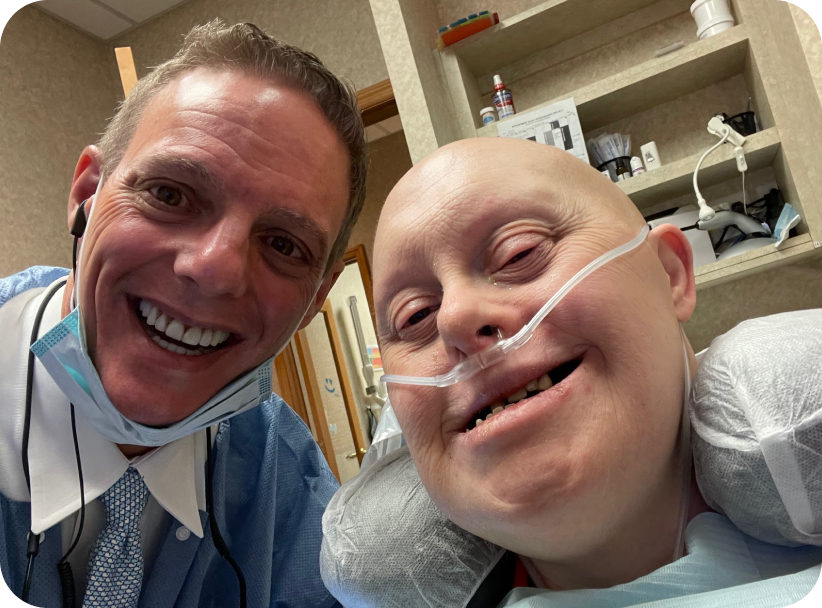
Although some dental cases can be complex, our patients become part of our extended care family. As they return for treatment, they begin to recognize familiar faces and feel more at ease. Our team builds trust over time — creating a safe and positive experience. For many families, what once felt impossible becomes manageable.
Over 30 years experience in sedation dentistry.
Smiles restored with dental sedation.
5 star reviews
Frequently asked questions.
Can periodontal treatment be done under sedation?
Yes. All periodontal procedures at Dental Sedation Centers are completed under IV sedation or General Anesthesia. You sleep comfortably throughout.
How many visits does periodontal treatment require?
Under sedation we can treat multiple quadrants in one visit. Most patients complete their periodontal treatment in 1-2 sedation appointments.
Is periodontal disease reversible?
Early gum disease (gingivitis) is fully reversible with treatment. Advanced periodontitis can be arrested and managed but not fully reversed. Early treatment is essential.
What happens after periodontal treatment?
Mild gum soreness for 2-4 days is normal. Regular maintenance cleanings every 3-4 months are required to keep the disease controlled long-term.
Does insurance cover periodontal procedures?
We work with most insurance companies. Coverage varies.
Do I need a driver?
Yes. A responsible adult must drive you home and stay with you for several hours after sedation. You cannot drive on the day of your procedure.
What Patients & Families Say





We’re here to help
How did you find us?
Two quick taps. It helps us reach more patients who need care.